
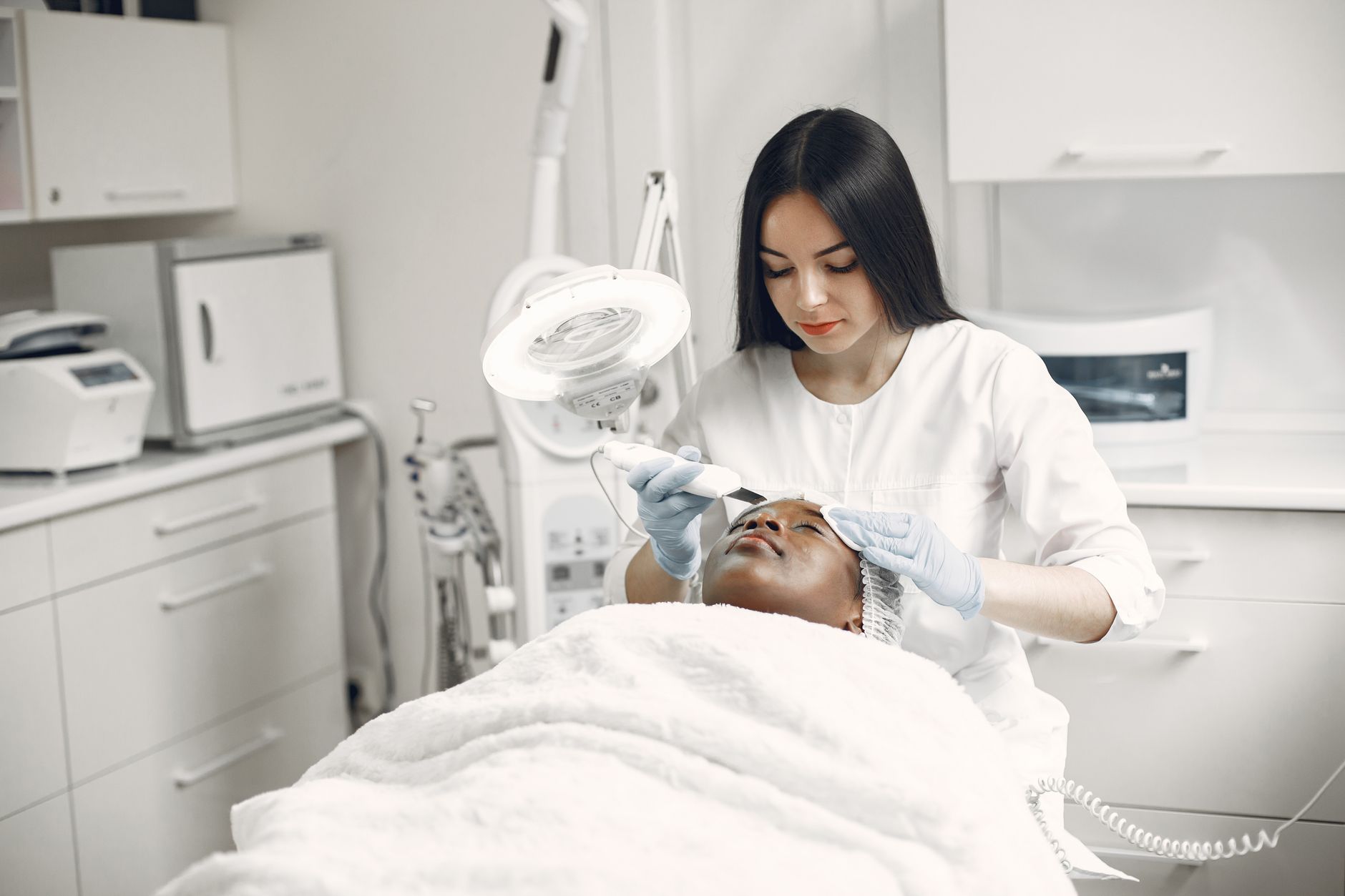
Why Most Med Spa Meta Ads Get Rejected — or Worse, Run Out of Compliance
Med spas are one of the fastest-growing segments in aesthetic healthcare, but they’re also one of the most frequently burned by Meta’s ad review system. Campaigns get disapproved, accounts get flagged, and owners assume the platform just doesn’t work for them. The real issue is almost always the creative or the targeting setup — not the platform itself.
Running Meta Ads for Regulated Industries requires understanding exactly where the lines are drawn and building campaigns that perform inside those boundaries. This post breaks down what compliance actually looks like for med spas, how to structure campaigns that generate real leads, and what benchmarks to hold your agency accountable to.

The Compliance Framework Every Med Spa Advertiser Needs to Know
Meta draws hard lines around health-related advertising. Meta’s Advertising Policies explicitly prohibit ads that imply or attempt to generate negative self-perception to promote diet, weight loss, or health products — and they restrict before-and-after imagery in ads for body image or weight loss products. For a med spa promoting body contouring or weight loss injections, that kills the most obvious creative approach immediately.
The FTC adds another layer. The FTC’s Guides on Endorsements and Testimonials require that any patient testimonial or transformation photo used in advertising must reflect honest, substantiated results — and you must disclose if results are not typical. Using a single dramatic result without that disclaimer is a compliance violation, not just a platform risk.
On the targeting side, Meta’s Special Ad Categories classify health and wellness advertisers — including cosmetic and medical services — as restricted in certain contexts. That means interest-based targeting and lookalike audiences can be limited when running ads tied to sensitive health topics. You’re working with a narrower toolset, which makes your creative and offer strategy even more critical.
This isn’t a reason to avoid Meta. It’s a reason to work with a team that knows how to build inside these guardrails without gutting campaign performance.
| Ad Element | Allowed | Restricted or Prohibited |
|---|---|---|
| Before-and-after photos | Clinical results with proper FTC disclaimers (context-dependent) | Body image or weight loss transformation imagery per Meta policy |
| Patient testimonials | Substantiated, honest results with “individual results may vary” disclosure | Unsubstantiated claims or atypical results presented as typical |
| Audience targeting | Geographic, age, and gender targeting; custom audiences from CRM | Interest-based and lookalike audiences in Special Ad Category contexts |
| Lead gen formats | Instant Forms, click-to-website, appointment booking integrations | Forms collecting sensitive health data without proper consent language |
| Offer messaging | Service promotions, pricing, consultations, limited-time offers | Language implying body shame or exploiting insecurities to drive action |
Creative Strategy That Converts Without Getting Flagged
The creative approach that works for compliant med spa Meta ads centers on aspiration and education — not insecurity. Showcase the experience of visiting your practice: clean treatment rooms, confident patients post-procedure, professional staff, the process of a consultation. This performs because it attracts people who are already considering treatment, not people who need to be pressured into it.
Video is your highest-leverage format. IAB and MRC viewability standards require at least 50% of an ad’s pixels to be in view for one continuous second for display ads — which means your first frame has to earn the stop-scroll. For med spa video, that means opening with the treatment environment or a clean, confident visual hook, not a text card. Get your key message in the first three seconds.
Offer-led creative — “Book your $99 consultation,” “Free skin assessment this month” — consistently outperforms vague awareness messaging for local service businesses. Pair it with a direct call to action and you have the foundation of a lead generation unit that clears Meta’s review process and drives booked appointments.
Lead Volume vs. Lead Quality: Getting the Format Right
Meta’s Instant Form lead ads let users submit their contact information without ever leaving the platform, which significantly reduces friction and increases lead volume. For med spas running consultation or booking campaigns, this format can generate strong top-of-funnel numbers fast.
The tradeoff: Instant Form leads are higher volume but often lower intent than someone who clicked through to your website, read your service page, and filled out a form there. The fix is to qualify leads inside the form itself — add a question like “Which service are you most interested in?” or “What’s your preferred appointment window?” That friction filters out browsers and surfaces the buyers.
For campaigns where conversion quality matters most — think high-ticket services like laser resurfacing or body contouring packages — click-to-website campaigns paired with a purpose-built landing page will produce better lead quality. This is where your post-click experience becomes the deciding factor. WordStream’s benchmarks show the health and medical industry averages a 3.36% landing page conversion rate — which means if your page isn’t purpose-built for conversion, you’re leaving the majority of your ad spend on the table.
The right answer is usually both formats running in parallel, with your CRM tracking downstream appointment rate by source. That’s how you optimize toward booked revenue, not just lead count.
Targeting in a Restricted Environment: What Still Works
When Special Ad Category restrictions limit your targeting options, the instinct is to panic. Don’t. There are still high-performing targeting levers available — you just need to know how to use them.
Geographic targeting remains fully available. For a med spa, that means targeting by zip code radius around your location, layered by age range and gender where appropriate for your service mix. CRM-based custom audiences — uploading your existing patient list and targeting lookalikes within allowed parameters — can still drive strong results. Retargeting your website visitors and social engagers is another powerful tool that isn’t restricted under most Special Ad Category contexts.
Pair this with a strong organic presence and you compound your paid reach without additional spend. SEO for Local Service Businesses builds the foundation that makes your paid campaigns more efficient — people who’ve already found you organically convert at a higher rate when they see your retargeting ads.
The bottom line: restricted targeting just means you need to work the creative and offer harder. A geographically tight, CRM-retargeted campaign with a compelling offer and compliant creative will outperform a broad, interest-targeted campaign with sloppy creative every time.
What Full-Funnel Attribution Looks Like for a Med Spa Practice
Most med spas running Meta ads have the same attribution blind spot: they know how many leads came in, but not how many of those leads actually booked, showed up, and purchased. Lead count is a vanity metric if you can’t connect it to revenue.
Full-funnel attribution for a med spa means tracking the path from ad impression → form fill → booked appointment → completed service → revenue. That requires your CRM, your booking software, and your ad platform talking to each other. When it’s set up correctly, you can see cost-per-booked-appointment and cost-per-treatment by campaign, creative, and audience segment. That’s the number that tells you whether your Meta ads are working.
This is also how you catch the Instant Form vs. landing page quality gap in real numbers — not assumptions. Google Ads That Actually Convert work the same way: every dollar needs to be traceable to a downstream outcome, not just a click or a form fill.
If your current agency is reporting on impressions, reach, and lead count without connecting those metrics to revenue, you don’t have a reporting system — you have a dashboard that makes the agency look good. Demand more.
Ready to run Meta ads for your med spa that are both compliant and built to convert? Book a strategy call with ETS Marketing Solutions to map your full-funnel growth plan — from compliant creative to closed-loop attribution.